


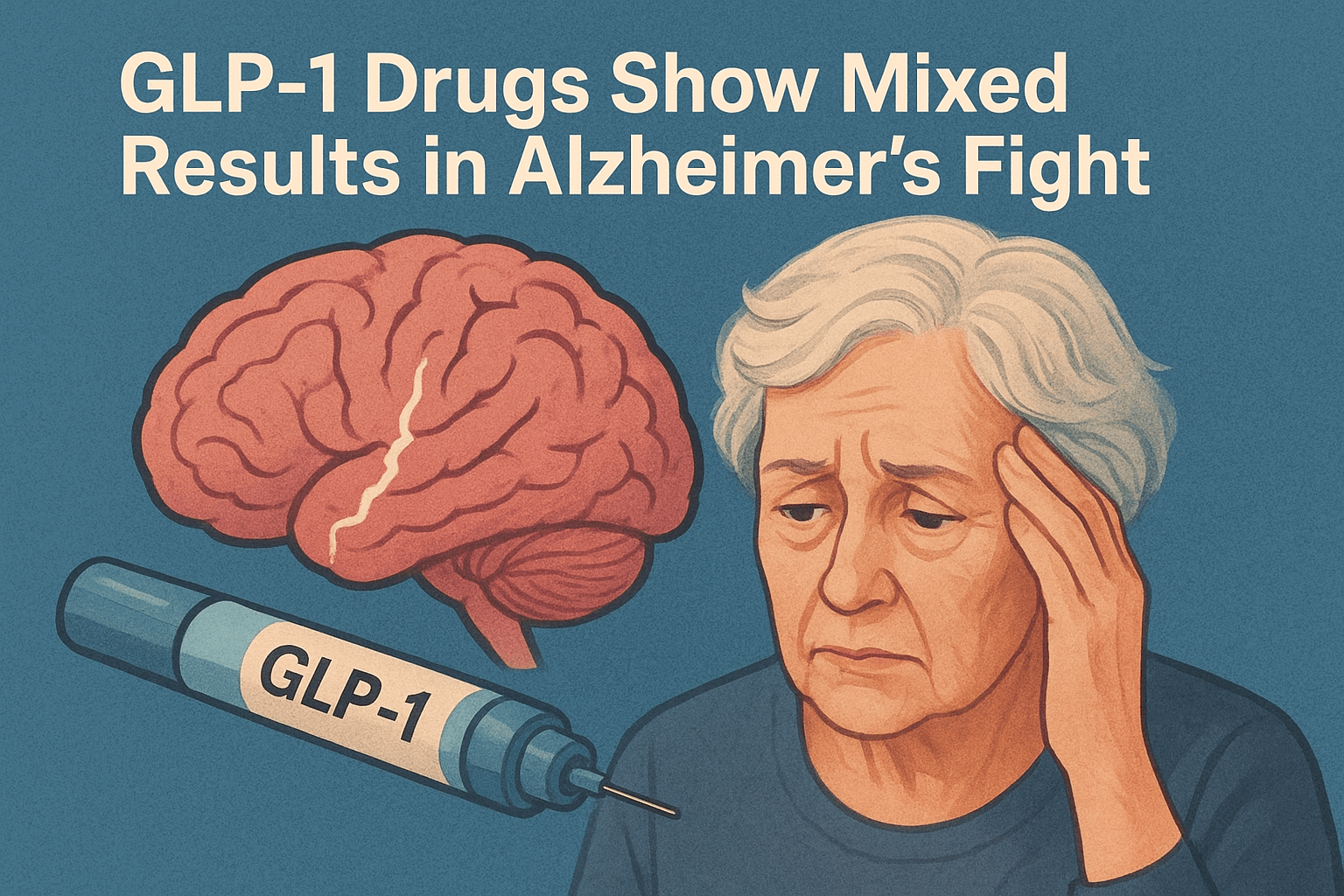
New trials reveal GLP-1 drugs, famous for weight loss, may help slow Alzheimer’s brain damage but fail to stop memory loss. Latest data from Novo Nordisk’s tests bring hope and setbacks in treating this tough brain disease.
What Are GLP-1 Drugs?
GLP-1 drugs like semaglutide (Ozempic, Wegovy) and liraglutide help control blood sugar in diabetes and cut weight. Doctors now test them for Alzheimer’s because the disease links to insulin problems in the brain, sometimes called “type 3 diabetes.”
These meds boost insulin, lower swelling, and protect brain cells. Early lab tests show they fight damage from bad proteins like amyloid and tau that harm Alzheimer’s patients.
Promising Early Trial Wins
A Phase II trial with 204 Alzheimer’s patients gave liraglutide for one year. It slowed brain shrinkage by 50% in key areas like gray matter, frontal, and temporal lobes compared to fake pills.
Patients on the drug lost brain volume half as fast, hinting at less nerve damage. Thinking skills dropped 18% slower, too, says lead researcher Paul Edison.
Real-world data on semaglutide in diabetes patients cut Alzheimer’s risk by 40% to 70%. This October study in Alzheimer’s & Dementia adds fuel to the idea that these drugs protect the brain early.
Latest Setback: Oral Semaglutide Fails
Big news hit on November 24, 2025: Novo Nordisk’s two large trials of oral semaglutide flopped. The pill did not slow Alzheimer’s march in patients with early to mid-stage disease.
Drug takers saw small wins in brain markers, like less protein buildup. But no real delay in memory loss or daily struggles, the company reports.
Experts say shots like Ozempic might work better than pills, as they reach the brain more. Still, this miss cools some hype around GLP-1s for late-stage care.
What’s Next for Phase III Tests?
Novo runs huge EVOKE and EVOKE Plus trials with semaglutide shots, due September 2025. These tests mild Alzheimer’s patients for real disease-slowing proof.
Brain expert Christian Hölscher predicts good results, saying past data backs the target. But George Perry warns that big, long studies are needed to prove prevention.
Other firms like Kariya tweak GLP-1s to cross into the brain faster, eyeing fewer gut side effects. Links to diabetes mean millions at risk could benefit if trials win.
Hope Amid Challenges
GLP-1s tackle Alzheimer’s swelling, energy loss, and cell death at once. Early signs excite doctors, but failures show the disease’s tricks.
Safety for long use and the cost of mega-trials worry experts. Yet, with 50% of dementia cases avoidable, these drugs fit lifestyle risks like obesity.
Watch the 2025 results, they could change how we fight the memory thief affecting millions. For now, mix hope with facts from solid tests.